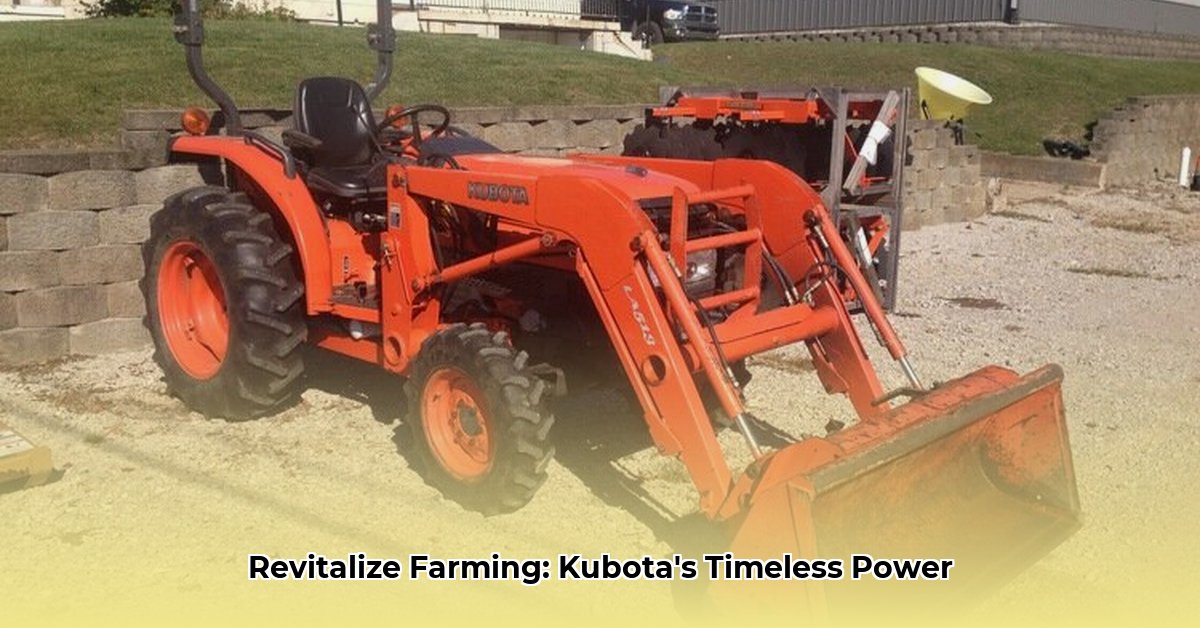
A Legacy of Compact Power: Kubota and Sustainable Agriculture
Kubota, a global leader in agricultural machinery since 1890, is synonymous with reliable farm equipment. Their expertise in compact tractors has revolutionized farming, particularly for smaller operations. These machines, including older models, offer a compelling pathway towards sustainable agriculture. But what exactly constitutes "green" farming in the context of these older tractors? For more on using older models, see this helpful resource.
Smaller farms, often served by Kubota's compact tractors, inherently utilize less land, reducing fuel consumption and minimizing soil compaction – two cornerstones of environmentally conscious farming. Well-maintained older Kubota tractors represent a cost-effective alternative to perpetually acquiring new equipment, appealing to farmers prioritizing both environmental responsibility and financial prudence. However, a nuanced perspective is vital; the advantages are not without their caveats.
The Environmental Impact: A Realistic Assessment
While older Kubota tractors may appear a sustainable choice, a balanced view is crucial. Comprehensive data on their overall environmental footprint remains scarce. Fuel efficiency varies dramatically across models and ages; similarly, emission levels, a major environmental factor, often go unreported. Thorough lifecycle assessments are necessary to understand their true ecological impact.
This data scarcity highlights a critical need: increased transparency. Kubota, along with other manufacturers, could significantly contribute by openly publishing detailed information about older models, including fuel efficiency and emission data. This transparency is essential for informed decision-making by farmers and policymakers alike.
Uncovering the Truth: Addressing Data Gaps
Frankly, significant knowledge gaps exist. To fully assess the environmental impact of an older Kubota tractor, a complete lifecycle analysis is required. This encompasses manufacturing processes (energy consumption, emissions, waste), materials sourcing (recycled content, sustainability), and end-of-life management (recycling potential, responsible disposal). Transparency from Kubota is paramount in resolving these information gaps.
Furthermore, the availability of replacement parts plays a crucial role. How long can farmers reasonably expect these tractors to operate before major repairs become necessary? These questions are paramount and warrant immediate attention.
Actionable Steps for a Greener Future
Sustainable practices require a collaborative approach. The following outlines actions for key stakeholders:
Kubota: Publish comprehensive reports detailing the sustainability of older models; enhance data transparency. Invest in R&D for electric or alternative-fuel compact tractors; implement a circular economy model for parts, maximizing reuse and recycling.
Farmers: Prioritize fuel-efficient operation and routine maintenance. Adopt precision farming techniques to minimize fuel use and optimize resource utilization; explore equipment-sharing programs.
Investors: Demand greater transparency in Kubota's sustainability reporting and practices. Invest in companies developing sustainable farming technologies compatible with older equipment.
Regulators: Implement stricter emission standards and regulations to incentivize sustainable improvements. Provide subsidies or incentives for farmers adopting sustainable practices and upgrading to more environmentally-friendly equipment.
Balancing Past and Present: Old Tractors and the Future of Sustainable Farming
Older Kubota tractors present a complex challenge. They offer a potentially sustainable entry point for small farms but emphasize the urgent need for industry-wide data transparency. Sustainability transcends the latest technology; it demands informed, responsible choices.
The balance between older machinery's affordability and the environmental advantages of modern eco-friendly technologies is critical. Further research, collaboration, and open data sharing are essential for harnessing the potential of sustainable farming. The future of sustainable agriculture hinges on this concerted effort. Continuous research and open dialogue surrounding the sustainability of older models and long-term farming impacts are absolutely vital.